
ADHD Therapy in Manhattan and Online in New York
If you've spent years hearing "just try harder," we'd like to offer a different starting point. ADHD is a difference in how your brain manages attention, time and emotion, and ADHD therapy can help you build a life that fits the way your brain works.
About 1 in 16 adults in the US has a current ADHD diagnosis, and more than half of them were diagnosed as adults, according to the CDC. Reframed Mental Health offers ADHD therapy in person at our Midtown Manhattan office and online anywhere in New York State. Our founder has ADHD too, we're in network with most major insurance plans, including Medicaid, and your first step is a free consultation.
Or call us at (212) 675-8255
- In network with 13 plans, including Medicaid
- In person at 55th & 6th in Midtown
- Online anywhere in New York State
- First session often the same week
Who you are is separate from what you're dealing with
At Reframed Mental Health, we try to work from a reframing mindset, and ADHD is one of the places it matters most. Missed deadlines, lost keys and the email you meant to answer three weeks ago can start to feel like proof of who you are. When you understand the science behind them, it gets a lot easier to separate who you are from what you're dealing with.
Your brain uses chemical messengers like dopamine and norepinephrine to manage attention, motivation, energy and how you handle stress. Researchers are still learning exactly how they work in ADHD, and everyone's brain is wired a little differently, which is why ADHD looks different from one person to the next. It's also why there's no one-size-fits-all treatment. Something that helps one symptom may not touch another, and that's normal.
"The palest ink is better than the best memory."
A Chinese proverb Edwin has leaned on for the last ten yearsWhat does ADHD look like in adults?
ADHD is a lot more than trouble paying attention. Here are some of the ways it shows up. How many sound like you?
Starting is the hardest part.
You can lose hours in something that grabs you, but a simple task you've been dreading sits on your list for weeks.
Time disappears.
It's somehow 4:00, you're running late again and you're not sure where the afternoon went. Some people call this time blindness.
Your memory drops things mid-task.
You walk into a room and forget why, or lose the instructions halfway through hearing them.
Emotions hit fast and hard.
Frustration or overwhelm shows up in a flash, then takes a long time to settle.
Criticism stings for days.
A short reply or a bit of feedback gets replayed over and over, or you avoid the situation altogether. This is often called rejection sensitivity.
Your inner critic is loud.
A voice in your head turns every missed deadline into proof that something is wrong with you.
If you recognize yourself here, it's worth a conversation, whether or not you have a diagnosis.
Or call us at (212) 675-8255
ADHD from someone who lives with it
Edwin Depner, our founder and Principal Psychotherapist, has ADHD and a form of written dyslexia. He talked through the ideas on this page out loud and had someone help him edit them, because, in his words:
"My ideas come fluid, and it would be very difficult for me to sit and organize them in written form with commas and punctuation. That stuff drives me crazy."
Living with both has meant constantly learning how to reorganize his thoughts and his emotions, and how to center himself and calm things down. The tool that's helped him most is bullet journaling, a system created by Ryder Carroll, who was diagnosed with attention deficit disorder as a child. What Edwin loves about it is that it doesn't need to be pretty. Make it ugly, make it work, make it memorable, make it helpful.
That's where the Chinese proverb comes in: the palest ink is better than the best memory. Edwin stopped trying to hold everything in his head a long time ago, and he can help you find a system you'll come back to, even if it never looks Instagram-ready.

How do you treat ADHD in therapy?
ADHD therapy works on two things at once: the practical side (time, memory, getting started) and the emotional side that years of struggling with those things can leave behind. Depending on what you need, that can include skills training for executive functioning, emotional regulation, and working through rejection sensitivity.
One tool Edwin uses is Socratic questioning, a way of asking questions that helps you look at the story you're telling yourself. "Why can't I just do this?" becomes "What part of this is hard for me, and what would make it easier to start?"
Another is Internal Family Systems (IFS), where we get curious about your inner critic: where it came from, what it's trying to protect you from and whether it's still helping. The goal is to understand that voice well enough that it stops running the show. It can be uncomfortable work, and that's exactly why it helps to do it with a licensed clinician who understands both the science and the emotions of ADHD.
Approaches our team uses
- Executive functioning skills
- Emotional regulation
- Rejection sensitivity
- Socratic questioning
- Internal Family Systems (IFS)
- EMDR
- Somatic grounding
- Mindfulness
Therapy, coaching or medication?
Whatever helps. There's no single ADHD treatment that works for everyone, so we think of it as building a toolbox: therapy, skills training, meditation, coaching and, for many people, medication. Some people use several at once, and most adjust the mix over time. (Edwin is a licensed mental health clinician, and he'll still tell you coaching can be really helpful.)
Medication has been helpful for Edwin and for a lot of people. Our therapists don't prescribe, so medication decisions are made with a psychiatrist or other prescriber. If you already have one, we're glad to work alongside them.
A good check-in is to notice which parts of your life are getting easier and which still need support. If you're still scattered, overwhelmed, emotionally reactive or stuck, that doesn't mean you've failed. It means your current tools aren't covering everything yet.
Small tools worth trying this week
Write it down.
Pick one place for tasks, appointments and ideas. It doesn't need to be neat. It needs to be somewhere you'll look again.
Make the next step smaller.
Swap "clean the kitchen" for "put the dishes in the sink." Starting is the hard part, so make starting easy.
Try body doubling.
Work alongside someone else, in person or on a video call. Having another person there can make it easier to start and keep going.
Use more than one format.
If reading a book about ADHD feels impossible (and it often does), try the audiobook, dictation or reminders.
Notice what helps.
Keep track of which strategies make things easier and which just add one more thing to manage.
Books Edwin recommends
Reading can be one of the hardest things to do with ADHD, so the audiobook counts.
-
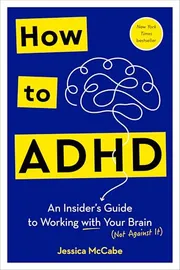
How to ADHD
Step by step, with lots of different ways to think about ADHD, including body doubling.
-
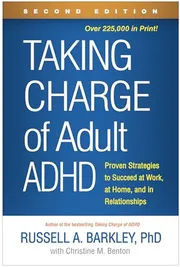
Taking Charge of Adult ADHD
Dr. Barkley is an internationally recognized authority on ADHD, and his work changed how Edwin thinks about it and how he works with clients.
-
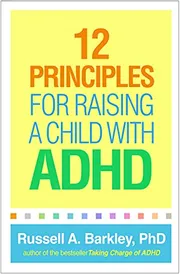
12 Principles for Raising a Child with ADHD
For parents.
-
The Bullet Journal Method
The system Edwin has used for the last ten years.

DISCLOSURE: We won’t include a book/product unless Reframed Mental Health has read/used it and deemed it broadly valuable to clients. To supplement the new book budget, we may earn an affiliate commission, at no cost to you, when you buy through links on our site.
More neurodiversity booksWho will I work with?
Edwin, Brian and Keilyn all specialize in ADHD or neurodivergence, and each brings something different.
-
Edwin Depner, LMHC-D
Edwin works with neurodivergent teens and adults, and brings his own experience with ADHD and dyslexia.
-
Brian Molloy, MHC-LP
Brian Molloy brings both professional expertise and personal, lived experience with ADHD to his work with clients, offering an understanding that extends beyond the clinical perspective. Having navigated many of these same challenges himself, Brian understands the frustration of executive dysfunction, difficulties with focus and motivation, and the self-criticism that can come with feeling different or misunderstood. He strives to create a space where clients feel seen and understood while helping them embrace their strengths, develop self-compassion, and find practical strategies that work with their brains rather than against them.
-
Keilyn Mercado, MHC-LP
Keilyn works with neurodivergent adults who have spent years masking (hiding or compensating for how their mind works to fit in). She also works with children and teens, and offers therapy in Spanish.



If your first match isn't the right fit, just tell us and we'll help you find someone who is.
Frequently asked questions
Can you diagnose ADHD?
Yes. Edwin is an LMHC-D, and the D stands for diagnostic privilege, so he can diagnose ADHD. We don't do one-time ADHD assessments. Instead, a diagnosis can come out of the therapy process, as we get to know how your brain works. If you're looking for a one-time assessment, we can refer you to someone who offers them.
Do I need a diagnosis to start therapy for ADHD?
No. The vast majority of people start therapy because something isn't working, and figuring out what's behind it is part of the work.
I already have another diagnosis. Could I have ADHD too?
Yes. ADHD often shows up alongside other diagnoses, like OCD and autism, so having another diagnosis doesn't rule out ADHD.
I'm an adult and was just diagnosed. Is that common?
Very. More than half of US adults with ADHD were diagnosed as adults, according to the CDC. A late diagnosis can bring relief and grief at the same time, and both are worth talking about.
What are the types of ADHD?
ADHD is diagnosed as one of three presentations: mostly inattentive, mostly hyperactive-impulsive, or combined. Two people with the same diagnosis can still have very different days, which is why we tailor therapy to you.
Can therapy help ADHD without medication?
Yes, therapy can help with the skills, emotions and self-talk that come with ADHD, whether or not you take medication. For many people, the two work best together, and that's a decision to make with a prescriber.
How long does ADHD therapy take?
It depends on your goals, and most people notice some differences within a couple of months. Just as ADHD looks different from person to person, so does treatment. Some people come for 3 to 6 months to build practical tools. Others also unpack the impact ADHD has had on their lives, and that can take much longer. Like any kind of change, the bigger the gap between where you are and where you want to be, the longer it usually takes to get there.
Do you work with kids and teens with ADHD?
Yes. Edwin works with teens, and Keilyn works with children and adolescents.
Does insurance cover ADHD therapy?
Usually, yes. Reframed Mental Health is in network with these plans, and most people pay about what they pay to see their primary care doctor. We check your coverage before your first session.
-
 1199 SEIU
-
 Aetna
-
 Cigna
-
 Curative
-
 First Health
- Medicaid
-
 Meritain Health
-
 NYC Employee PPO
-
 Optum
-
 Oscar
-
 Oxford
-
 UMR
-
 UnitedHealthcare
What if I'd rather not use insurance?
Private pay is $125 for a 55-minute individual session. Some people choose it because their plan isn't one we take, they have a high deductible or they'd rather keep therapy off their insurance.
In person or online?
Both. Our office is at 1350 Avenue of the Americas, a little north of Rockefeller Center at 55th & 6th, and we see clients online anywhere in New York State. Every therapist on our team works a hybrid schedule, so we can find a time and format that fits your week.
How do I get started?
-
Book your free consult
Pick a time online or give us a call. It's a short call with our intake team, not a therapy session, so there's nothing you need to prepare.
-
We handle the logistics
We talk through scheduling, insurance and whether you'd like to meet in person or online, then check your coverage. That way your first session can be about connection, not logistics.
-
Meet your therapist
We match you with a therapist who fits what you're looking for and your schedule. Depending on the therapist, we can often book your first session the same week.
You don't need to have it all organized to start
Tell us what's going on, in whatever order it comes out, and we'll take it from there.
Or call us at (212) 675-8255
Clinically reviewed by Edwin Depner, LMHC-D, Founder & Principal Psychotherapist